
How a Living Print™ is made
A Living Print™ starts as more than a single exposure — phases of a movement, a photograph and its depth map, or two separate pictures. Those are interlaced into one image and bonded to a lenticular sheet, so each lens column shows a different phase depending on where you stand. No screen, no power, no battery to run out.
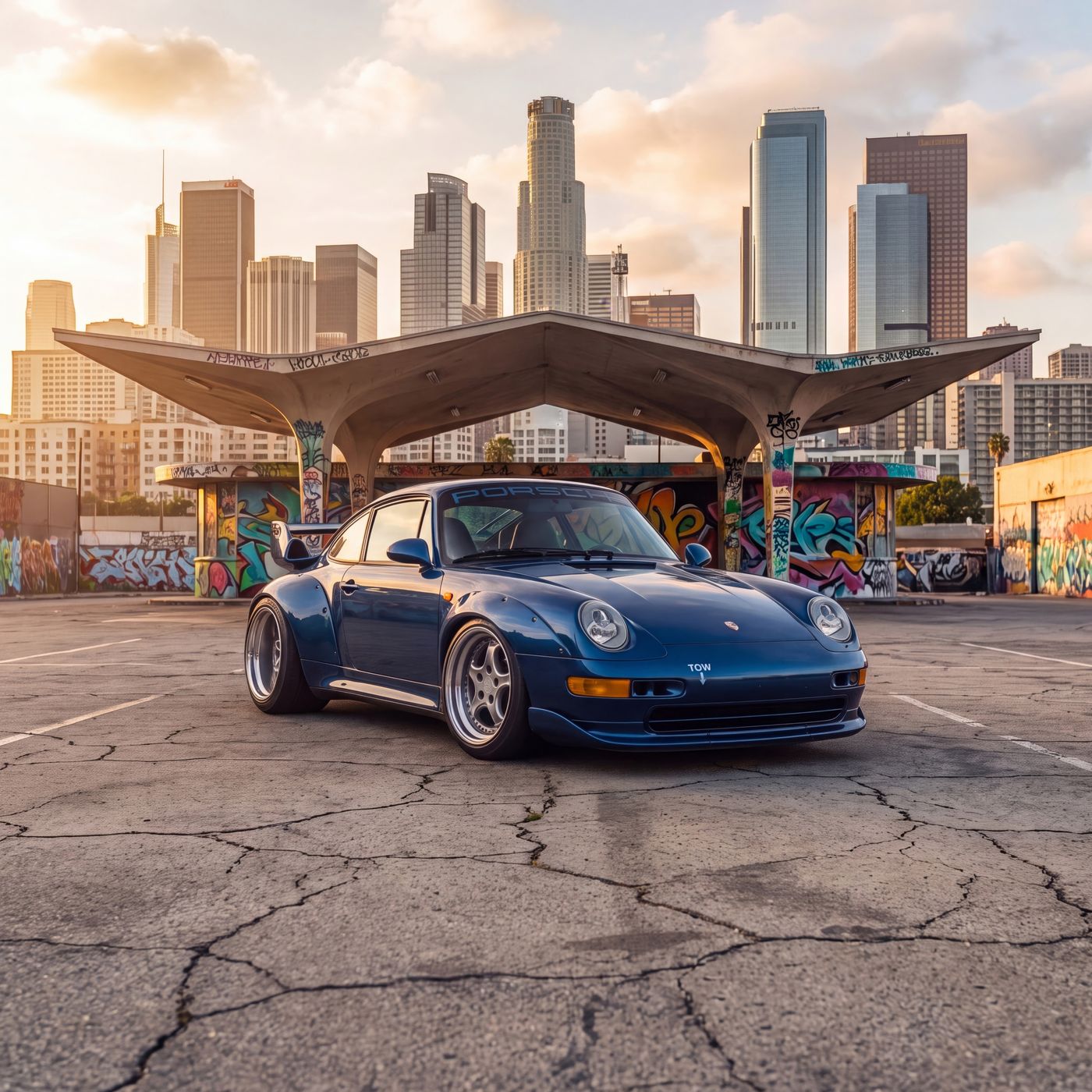

Six stages, in order. Every one of them is a judgement, and the judgements compound.
- Choosing the work
It starts as a photograph — or as an artwork
Every work begins with something real. For the automotive works that is a genuine photograph: a real car, in a real place, at a real moment, taken by our own photographers or by talented photographers we hand-pick. For the collaborations it is an original artwork, adapted to a Living Print™ together with its artist — which is what the collaboration with Adonis Alcici is: his paintings, opened up into depth.
From there, AI is used to extend and intensify the image — pushing the light, opening the depth, and building the additional phases the interlacing needs. The starting point is always the photograph or the artwork itself, and we say so plainly.
Either way, not every image has a Living Print™ in it, and the ones that do are not always the strongest pictures — what matters is whether there is real separation to open up, or two moments worth holding in one frame.
Onephotograph, or one artworkWhere every work begins- A real car, in a real place, at a real moment
- Or an original work, adapted with its artist
- Building the phases
One image, or several, cut into phases
A depth map read and separated by eye, or a movement cut into the number of steps that will read as motion rather than as stutter. Too few and it jumps; too many and each one is starved of lens.
Which effect a work gets is decided by the material, not by preference. A photograph with real separation between foreground and horizon wants 3D. Two frames of the same scene under different light want Flip. A drawing built up in stages wants Motion.
- Choosing the pitch
Coarse enough to carry, fine enough to hold
The sheet is specified in lines per inch. A coarser pitch carries more phases and holds the effect from further away, which suits the large formats; a finer pitch resolves more detail up close and suits the small ones. It is decided for that image, at that size, for the distance people will stand at.
So it is set by the format and the effect, not by preference: 40 LPI on everything from 60 × 60 cm up and on every Adonis edition; below that, 40 for a flip, 50 for motion and 60 for 3D. And for the most impressive, deepest 3D on the large formats there is 20 LPI — the coarsest sheet of all, with the most room under every lens. A production decision, not an option on the order form.
Four pitches, to scale — enlarged six times20 LPI · the deepest 3D, large formats40 LPI · large formats, flip50 LPI · motion, small formats60 LPI · 3D, small formats - Printing
Thirty dots under every lens
The interlaced file is printed at 1200 DPI, on a stock chosen to sit under a lens rather than to look good on its own. At 40 lines per inch that is thirty printed dots beneath every lens column — the reserve each phase is cut from, and why the pitch is settled before anything is printed.
1200dots per inch30 of them under one lens column, at 40 LPIThe print behind the sheet - Bonding
In register, or scrap
The sheet is laid onto the print with its lens columns in register with the interlacing, to a fraction of a millimetre across the whole piece. Out by a hair and the depth flattens, the flip ghosts, and the work is scrap — there is no rescuing it afterwards.
Lens over print — and out by a hair - Finishing
Mat, frame and edges
A lens sheet behaves like glass and nothing like paper, so mat and frame matter more here than on a flat print: the sheet has physical depth, and a mat gives it somewhere to sit. The 30 × 30 cm size is an 18 × 18 cm image set in a dark 30 × 30 cm mat, which gives a small piece weight and presence without the cost of a large print. Every size can also be framed, in a black profile.
A frame also protects the print, and gives it a simple way onto a wall — or onto a picture shelf. We recommend one, unless you would rather frame it yourself in something entirely different: ours were hand-picked for the best visual result.
- 30 × 30 and 40 × 40 cm
- 8 mm face, 26 and 28 mm off the wall
- 40 × 60 cm and up
- 20 mm face, 30 mm proud
- Framed, overall
- 60 × 60 becomes 62.6 × 62.6 cm
18 × 18 cm in a 30 × 30 cm mat
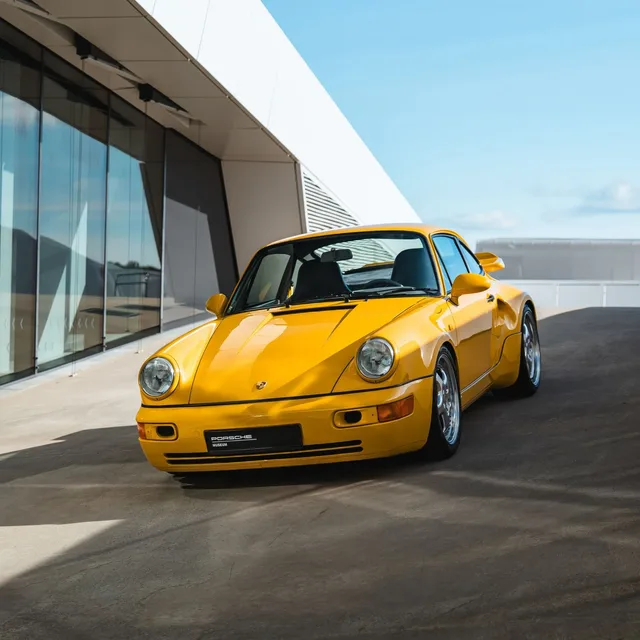
None of this is a preset. Every stage is a judgement made by hand — and hurry any of them, and it shows.
It is why a Living Print™ is made one at a time, by people who have learned over years what each stage does to the next — and why every piece is checked the way it will be seen, walked past and tilted, before it leaves with a certificate carrying its unique number and the date it was made.
The Adonis Alcici works go out as one edition of 25 pieces per work, shared across every size rather than 25 of each; everything else is numbered individually.
No size is held in stock. Every piece is built for the order it belongs to, with the pitch, the interlacing and the bonding settled for that work.
A sheet one person can handle, a short bonding run, and register that only has to hold across an arm’s length of print.
The same build, but at that scale it is far more complicated: a larger sheet, a longer bonding run, and register that has to hold right across the piece with no correcting it afterwards.
That is also why the price per square centimetre is not flat across the ladder. You are not buying more of the same thing in a bigger size.